Ask about our free Pilot2Partnership program
Learn more

Product
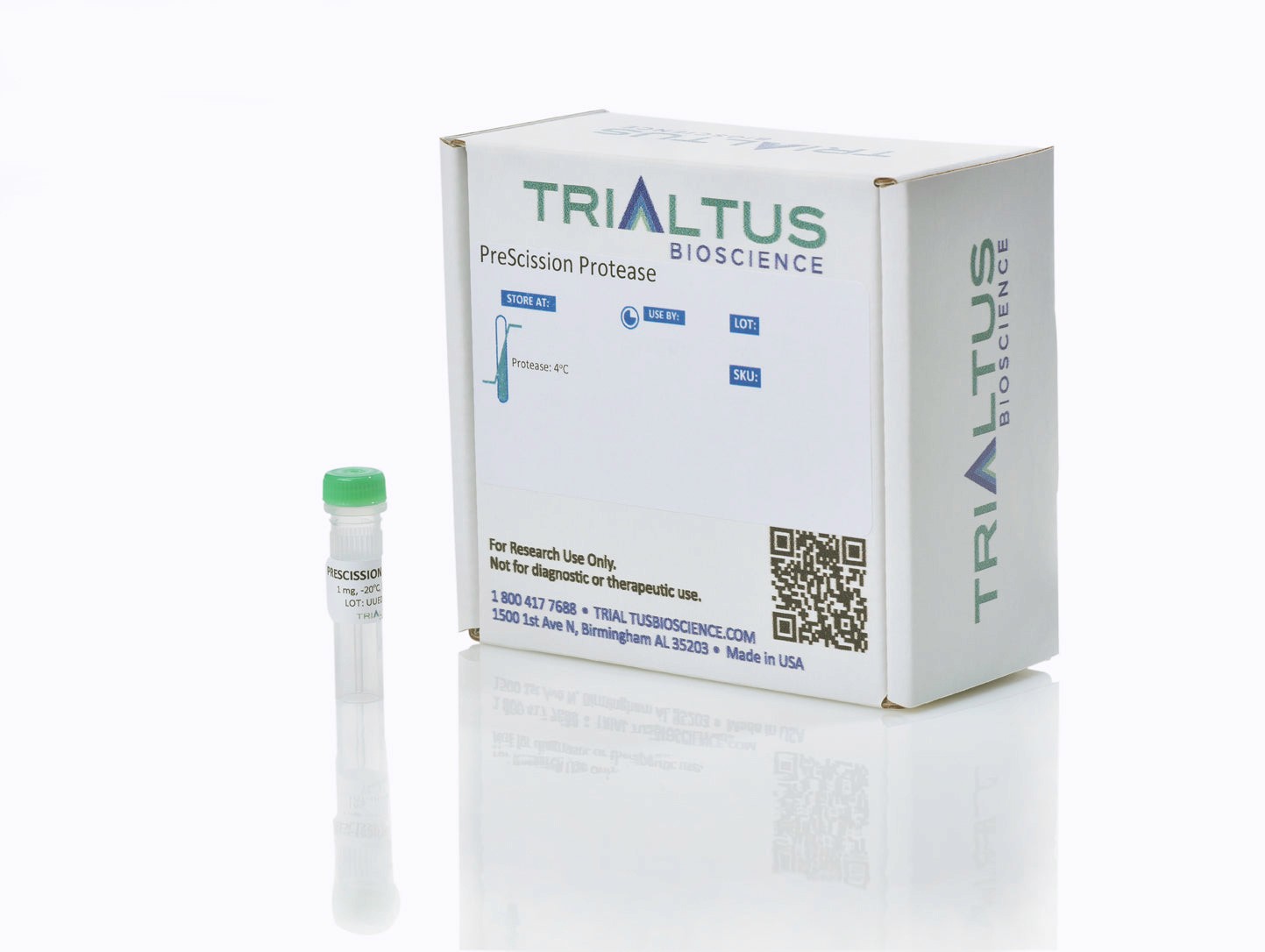
PreScission Protease
$145
Quantity
Buy in Bulk
Quantity
Buy in Bulk
Specifications
Data Sheets
Similar Products
Shipping
Buy Now
Overview
PreScission protease (PSC) is a site-specific protease used to remove fusion tags from recombinant proteins. PSC recognizes the sequence LEVLFQ/GP and cleaves between Q and G, enabling clean tag removal under controlled conditions.
Also known as: PreScission protease, HRV 3C protease, human rhinovirus 3C protease, 3C protease, GST-3C protease
Why Purity and Specificity Matter for PreScission Protease
Protease-based tag removal is sensitive to enzyme purity and specificity because contaminating proteases can introduce off-target cleavage and reduce recovery of the desired protein. A well-characterized, high-purity PSC helps improve reproducibility across lots and supports predictable digestion conditions, particularly for workflows that benefit from low-temperature cleavage.
Bulk Supply & Program Support
TriAltus supports bulk supply and tailored formats for organizations that require dependable, long-term access to PreScission protease for standardized workflows. Volume-based pricing is available to support program-level demand and cost-of-goods targets at scale. Production is performed under ISO 13485–compliant processes, supporting quality systems, documentation, and batch-to-batch consistency. Contact TriAltus to discuss volume requirements, documentation needs, packaging preferences, and to request a quote.
Key Benefits
Site-specific tag cleavage at the LEVLFQ/GP recognition sequence (cleaves between Q and G)
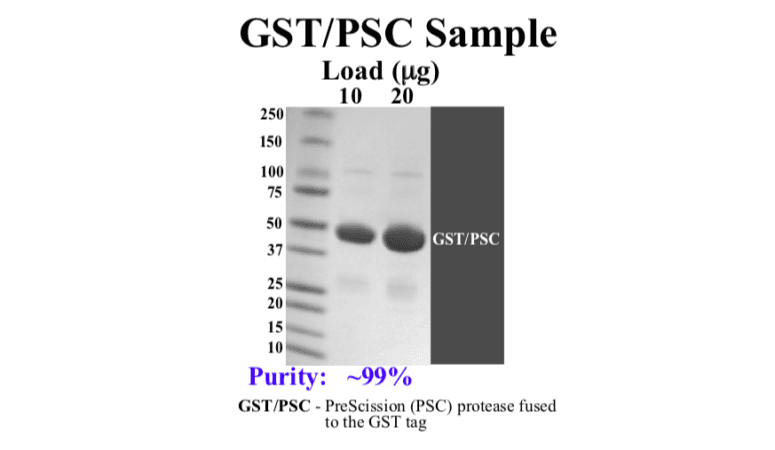
High purity: released at >99% purity as assessed by SDS-PAGE
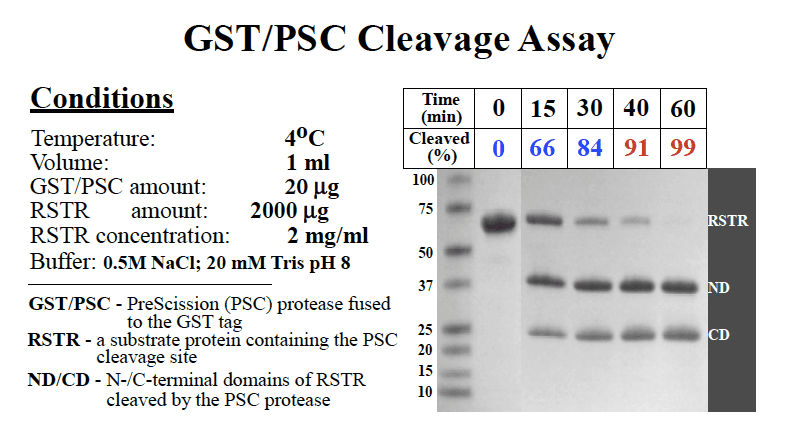
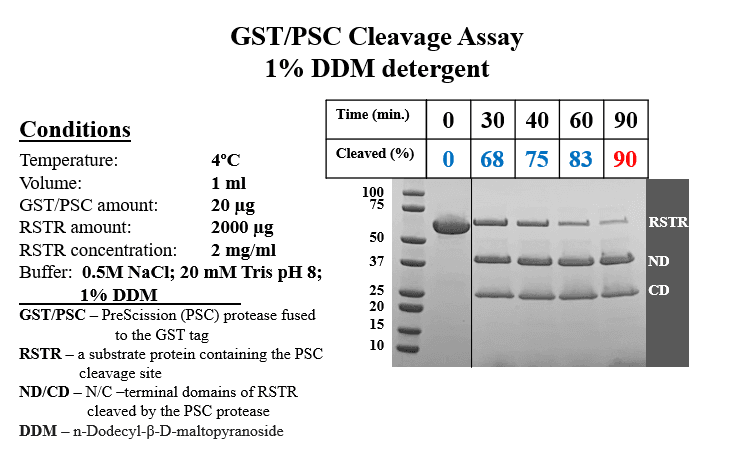
Efficient low-temperature digestion: representative condition achieves ~99% digestion at 4°C in 60 minutes (20 µg protease per 2 mg target protein)
Specifications
PURITY | >99% (SDS gel analysis)
ENZYME SOURCE | Human Rhinovirus (HRV) 3C Protease overexpressed in E. coli with a glutathione S-transferase (GST) tag
CLEAVAGE SITE | PSC recognizes the sequence LEVLFQ/GP and cleaves between the glutamine (Q) and glycine (G)
CLEAVAGE EFFICIENCY | 20 ug protease will digest 2 mg protein with 99% efficiency at 4°C in 60 minutes.
STORAGE/SHIPPING CONCENTRATION | ~5 mg/mL
SHIPPING CONDITION | We ship PreScission Protease on dry ice in buffer (20 mM Tris (pH 8.0), 0.1 M NaCl, 1 mM EDTA, 50% glycerol, 1 mM βMe).
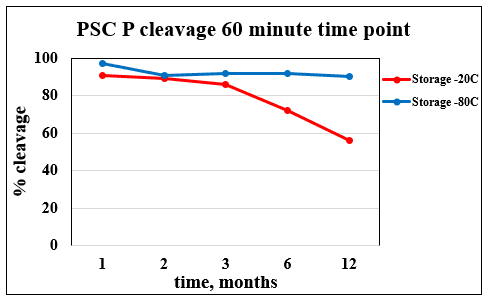
RECOMMENDED STORAGE CONDITIONS | -80°C long term or -20°C for 2-3 months in shipping buffer
EXPIRATION | 6 months from receipt when stored as directed
SKU List
1 mg: 30-2130 | 5 mg: 30-2135 | 10 mg: 30-2140 | 50 mg: 30-2146 | 100 mg: 30-2150 | Bulk: Inquire
Applications
Fusion tag removal
PSC is commonly used to cleave engineered fusion tags from recombinant proteins containing the LEVLFQ/GP recognition sequence.
Low-temperature digestion workflows
For proteins that benefit from gentle handling, PSC supports efficient digestion at 4°C under defined conditions.
Downstream assay and structural workflows
Clean tag removal can support more predictable behavior in biophysical characterization, enzyme assays, and binding studies.
Learn More
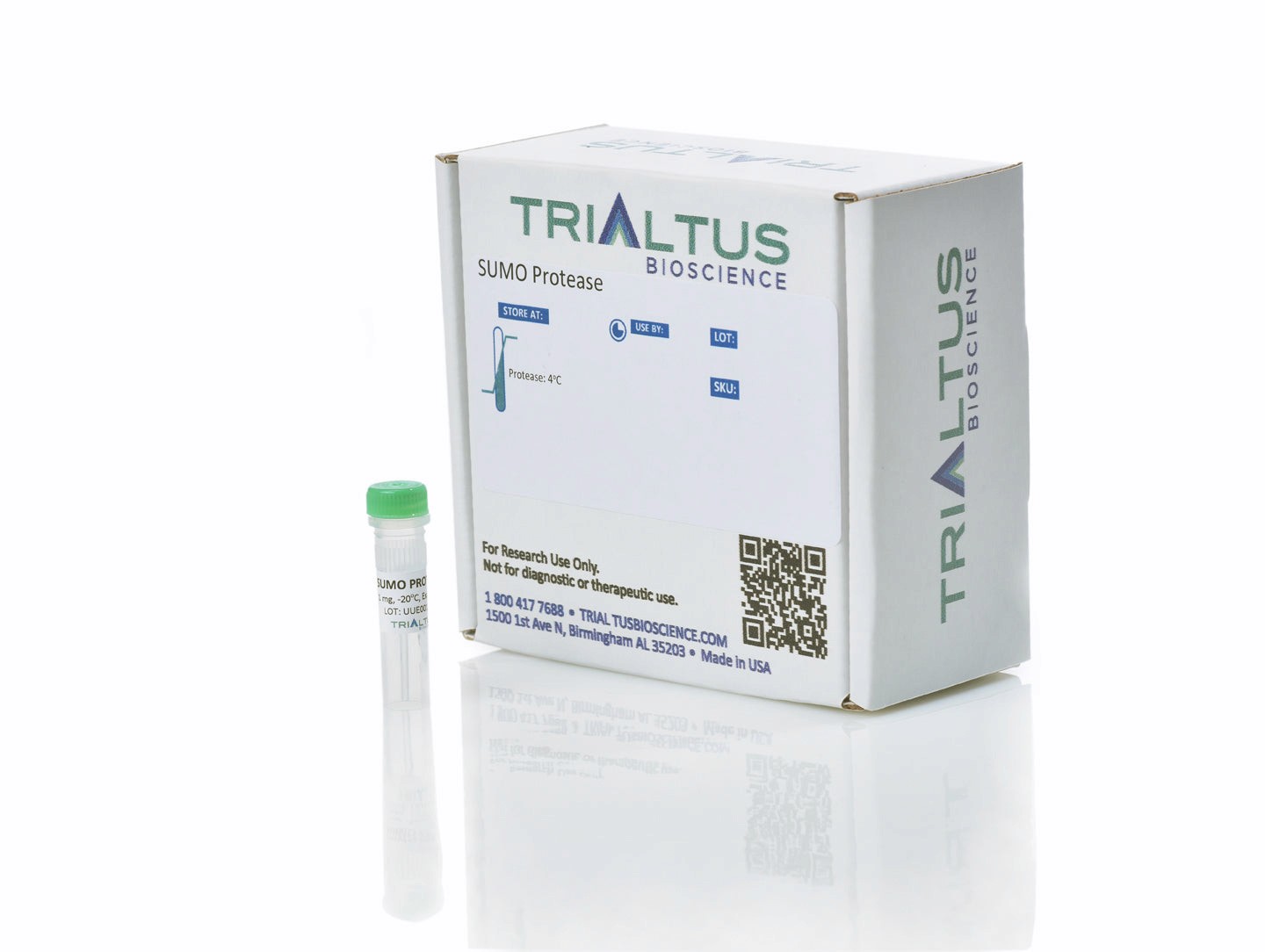
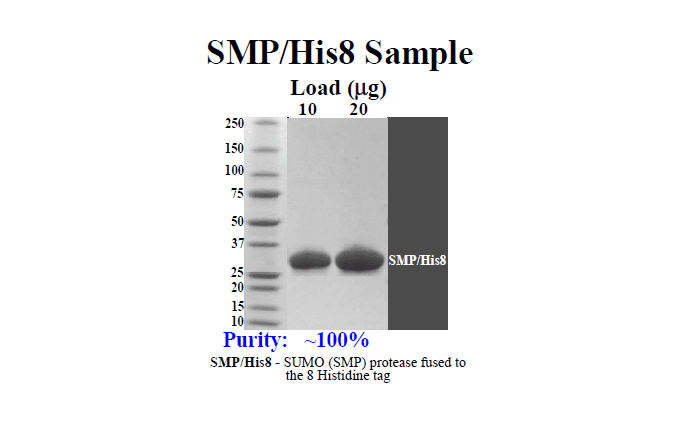
Compare related proteases on the SUMO Protease page.
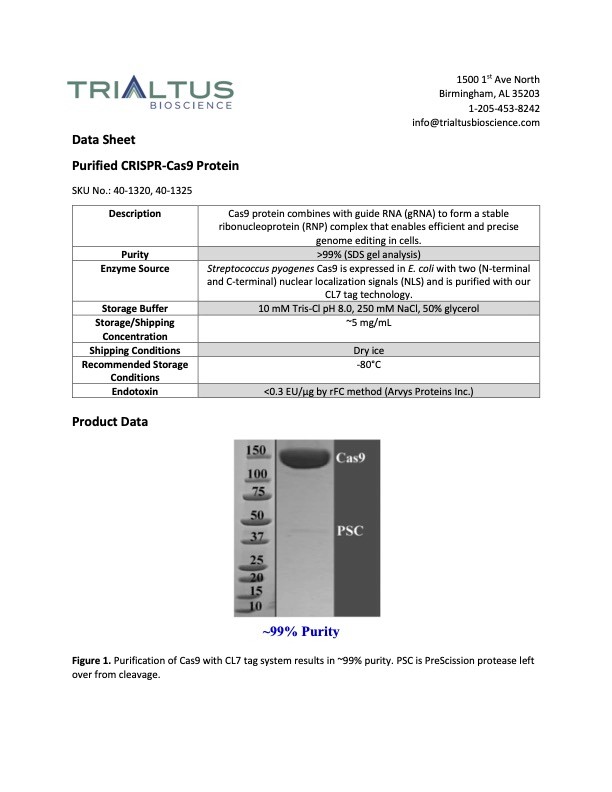
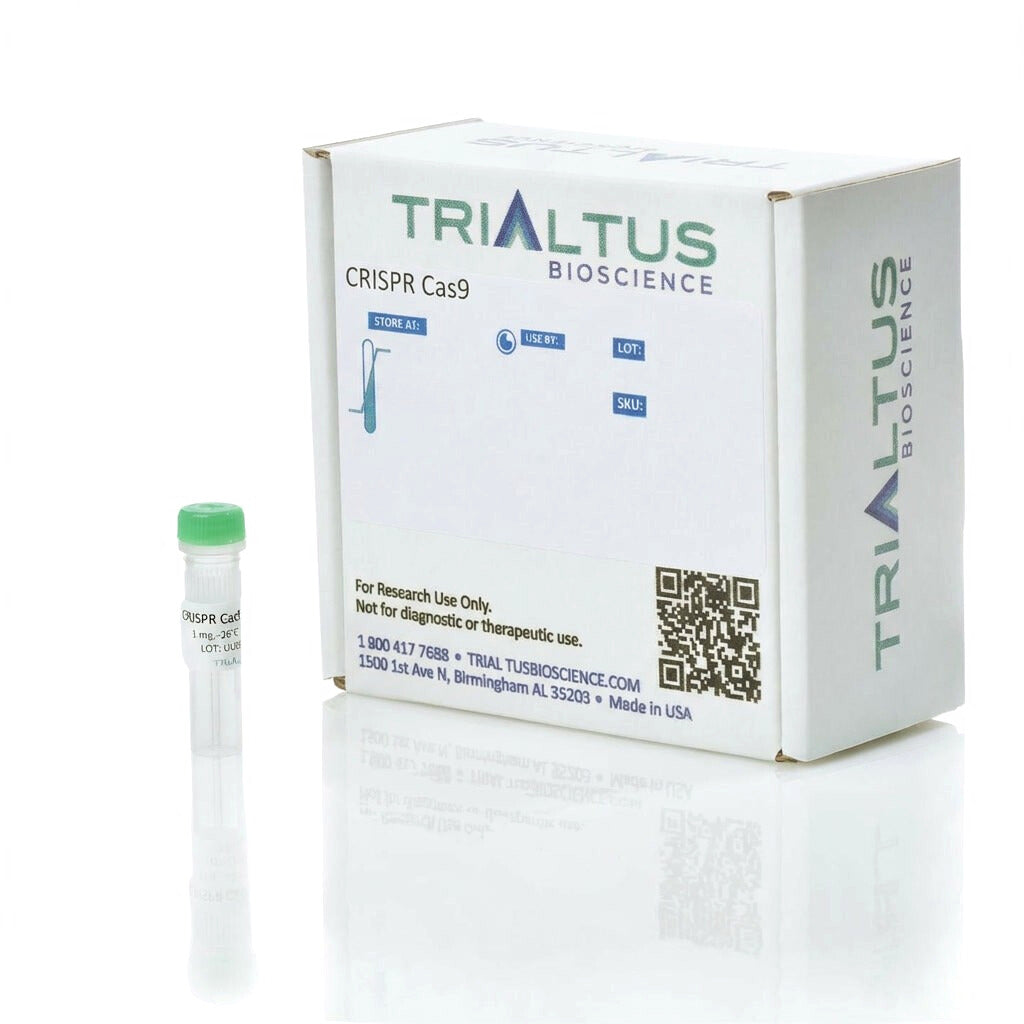
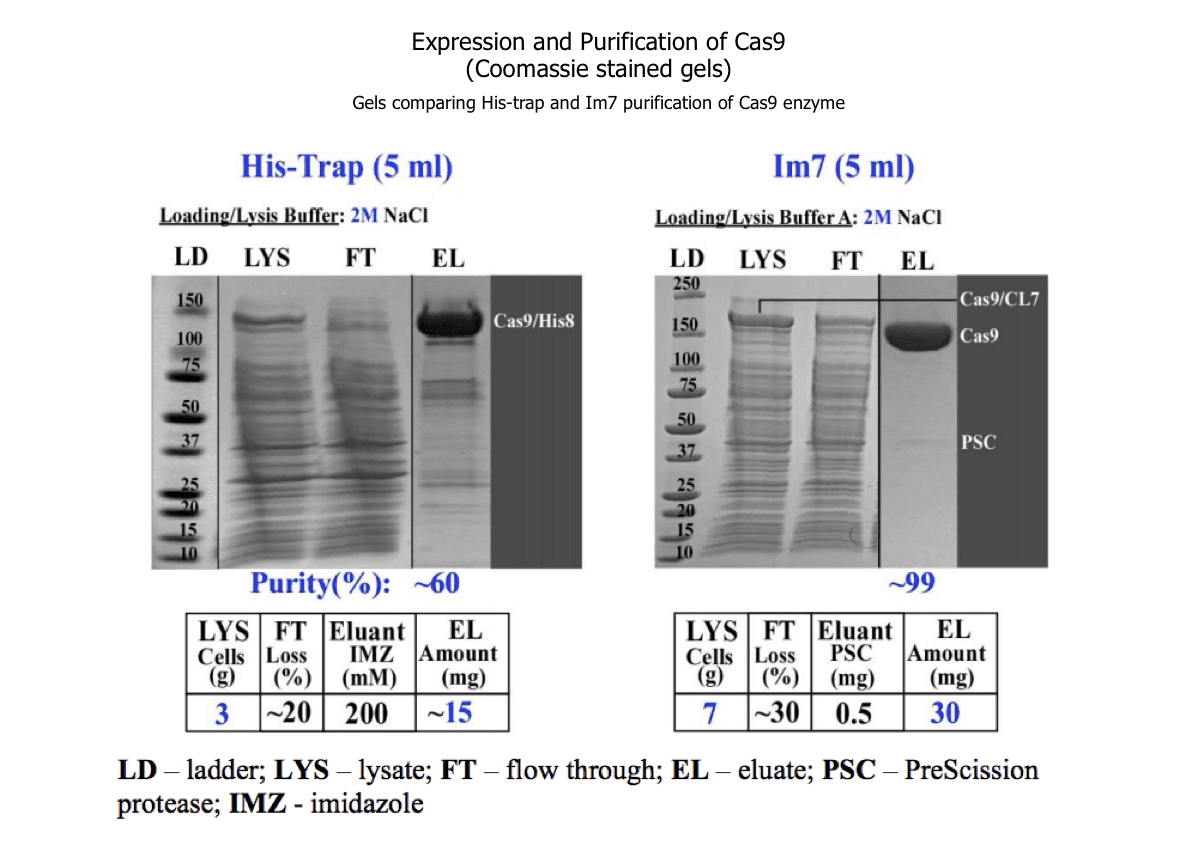
Explore high-purity genome editing enzymes on the Purified CRISPR-Cas9 Protein page.
FAQs
What cleavage site does PreScission protease recognize, and where does it cut
PreScission protease recognizes LEVLFQ/GP and cleaves between Q and G, enabling clean removal of engineered fusion tags when that site is designed into the construct.
Can this protease be used under gentle conditions for sensitive proteins?
Yes. PreScission protease is commonly used in workflows that benefit from controlled digestion conditions, including low-temperature cleavage (e.g., 4°C) for proteins that require gentler handling.
What are typical starting conditions for method development and scale-up?
A representative starting point is 20 µg protease per 2 mg target protein for ~99% digestion at 4°C in 60 minutes.
Does the PreScission protease have a tag?
Yes. PreScission protease is supplied in a tagged format (GST-tagged) to support handling and workflow integration.
Are other tag options available?
Yes. Alternative tag formats or tailored configurations may be available depending on program needs and downstream requirements. Contact TriAltus to discuss your preferred tag format.
Overview
PreScission protease (PSC) is a site-specific protease used to remove fusion tags from recombinant proteins. PSC recognizes the sequence LEVLFQ/GP and cleaves between Q and G, enabling clean tag removal under controlled conditions.
Also known as: PreScission protease, HRV 3C protease, human rhinovirus 3C protease, 3C protease, GST-3C protease
Why Purity and Specificity Matter for PreScission Protease
Protease-based tag removal is sensitive to enzyme purity and specificity because contaminating proteases can introduce off-target cleavage and reduce recovery of the desired protein. A well-characterized, high-purity PSC helps improve reproducibility across lots and supports predictable digestion conditions, particularly for workflows that benefit from low-temperature cleavage.
Bulk Supply & Program Support
TriAltus supports bulk supply and tailored formats for organizations that require dependable, long-term access to PreScission protease for standardized workflows. Volume-based pricing is available to support program-level demand and cost-of-goods targets at scale. Production is performed under ISO 13485–compliant processes, supporting quality systems, documentation, and batch-to-batch consistency. Contact TriAltus to discuss volume requirements, documentation needs, packaging preferences, and to request a quote.
Key Benefits
Site-specific tag cleavage at the LEVLFQ/GP recognition sequence (cleaves between Q and G)
High purity: released at >99% purity as assessed by SDS-PAGE
Efficient low-temperature digestion: representative condition achieves ~99% digestion at 4°C in 60 minutes (20 µg protease per 2 mg target protein)
Specifications
PURITY | >99% (SDS gel analysis)
ENZYME SOURCE | Human Rhinovirus (HRV) 3C Protease overexpressed in E. coli with a glutathione S-transferase (GST) tag
CLEAVAGE SITE | PSC recognizes the sequence LEVLFQ/GP and cleaves between the glutamine (Q) and glycine (G)
CLEAVAGE EFFICIENCY | 20 ug protease will digest 2 mg protein with 99% efficiency at 4°C in 60 minutes.
STORAGE/SHIPPING CONCENTRATION | ~5 mg/mL
SHIPPING CONDITION | We ship PreScission Protease on dry ice in buffer (20 mM Tris (pH 8.0), 0.1 M NaCl, 1 mM EDTA, 50% glycerol, 1 mM βMe).
RECOMMENDED STORAGE CONDITIONS | -80°C long term or -20°C for 2-3 months in shipping buffer
EXPIRATION | 6 months from receipt when stored as directed
SKU List
1 mg: 30-2130 | 5 mg: 30-2135 | 10 mg: 30-2140 | 50 mg: 30-2146 | 100 mg: 30-2150 | Bulk: Inquire
Applications
Fusion tag removal
PSC is commonly used to cleave engineered fusion tags from recombinant proteins containing the LEVLFQ/GP recognition sequence.
Low-temperature digestion workflows
For proteins that benefit from gentle handling, PSC supports efficient digestion at 4°C under defined conditions.
Downstream assay and structural workflows
Clean tag removal can support more predictable behavior in biophysical characterization, enzyme assays, and binding studies.
Learn More
Compare related proteases on the SUMO Protease page.
Explore high-purity genome editing enzymes on the Purified CRISPR-Cas9 Protein page.
FAQs
What cleavage site does PreScission protease recognize, and where does it cut
PreScission protease recognizes LEVLFQ/GP and cleaves between Q and G, enabling clean removal of engineered fusion tags when that site is designed into the construct.
Can this protease be used under gentle conditions for sensitive proteins?
Yes. PreScission protease is commonly used in workflows that benefit from controlled digestion conditions, including low-temperature cleavage (e.g., 4°C) for proteins that require gentler handling.
What are typical starting conditions for method development and scale-up?
A representative starting point is 20 µg protease per 2 mg target protein for ~99% digestion at 4°C in 60 minutes.
Does the PreScission protease have a tag?
Yes. PreScission protease is supplied in a tagged format (GST-tagged) to support handling and workflow integration.
Are other tag options available?
Yes. Alternative tag formats or tailored configurations may be available depending on program needs and downstream requirements. Contact TriAltus to discuss your preferred tag format.
Do prices include shipping and handling?
What is your turnaround time?